ServicesRoof Inspections
Roof Inspections in New Palestine
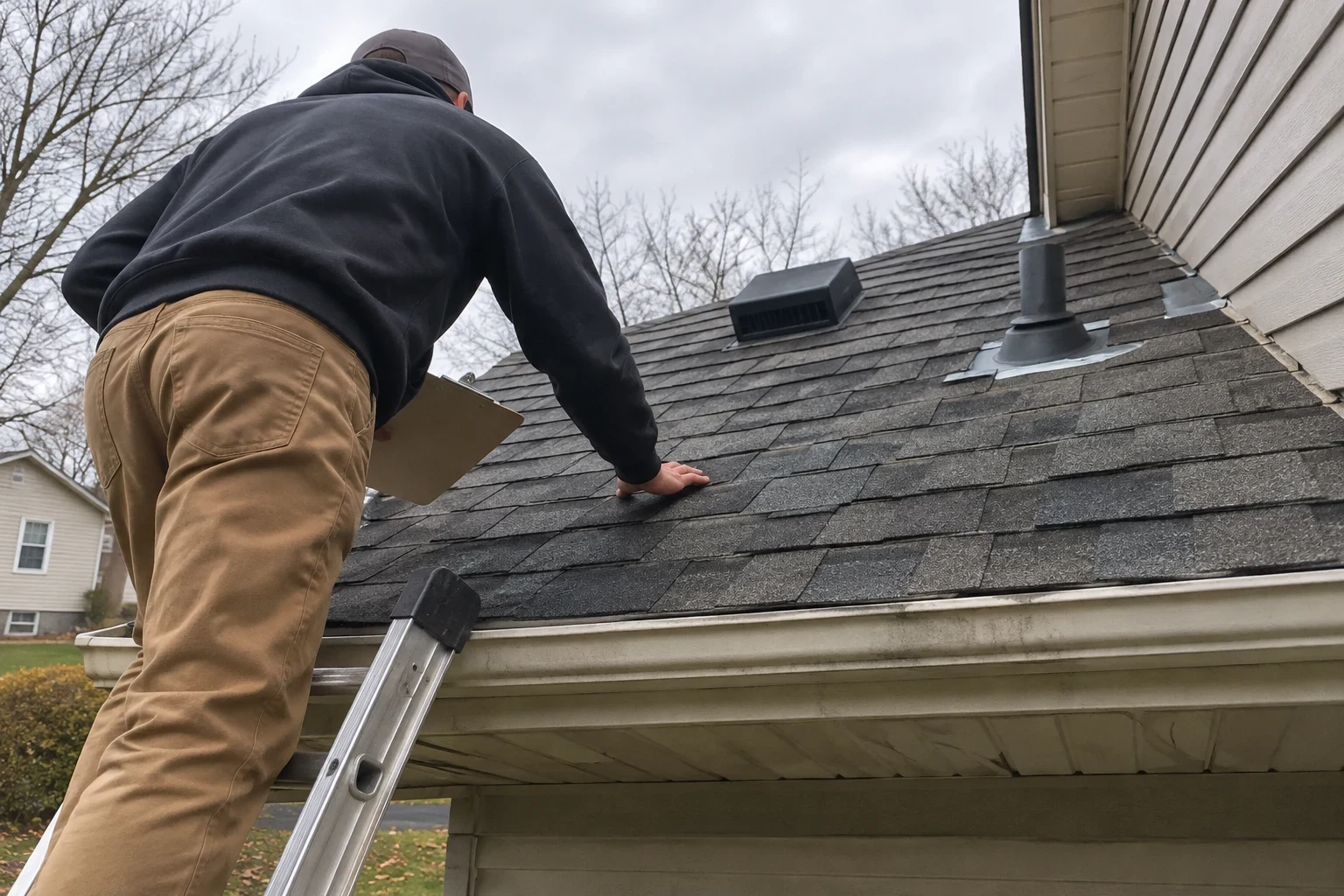
We climb the ladder so you never have to. A free roof inspection covers the shingles, flashing, vents, gutters and the attic underneath, and you get photos of what we found with a plain answer on what, if anything, your home needs.
A Clear Picture of Your Roof Before Anything Gets Worse
Most roof problems start small and quiet. A lifted shingle, a cracked pipe boot or a gap in step flashing can let water in for months before a stain shows on the ceiling. An inspection finds those early, while the fix is still modest.
Central Indiana winters are hard on a roof. Snow melts by day and refreezes at night, which works water under shingle edges and pushes ice against gutters and valleys. Spring and summer storms add wind and hail. A spring or fall inspection catches that wear before the next season adds to it.
We treat the inspection as a safety check as much as a roofing one. Wet insulation near a light fixture, a loose gutter over a walkway or a soft spot in the decking all matter to the people living below, so we look for them and tell you plainly.
What We Check on Every Inspection
Shingles and surface
We check for missing, creased or curling shingles, bare patches where granules have worn off, nails backing out and the soft bruises hail leaves behind. Metal and TPO roofs get their own review of fasteners, seams and membrane edges.
Flashing and penetrations
Leaks usually begin where something passes through the roof or meets a wall. We look over chimney, skylight and wall flashing, the sealant along it, and the rubber boots on plumbing vents, which tend to split once sunlight has dried them out.
Attic and decking
Up in the attic, we study the underside of the decking for pinpoints of daylight, dark water marks and mold, and we feel for insulation that has gone damp or flat. We also compare intake and exhaust vents, because a stuffy, humid attic ages shingles from below and helps ice dams form.
Gutters and drainage
Gutters should be fastened tight, sloped toward the downspouts and open enough to move water away from the foundation. Any section that sags gets noted, since snow and ice can tear it loose.
Photos and a written summary
Anything worth your attention is photographed and labeled with its spot on the roof. When everything checks out, the summary says that too.
When a Roof Inspection Makes Sense
After hail or high wind
Severe weather can crack, bruise or loosen shingles in ways you cannot spot from the yard. A prompt look also leaves you with dated photos if you later decide to open a claim.
Stains on a ceiling or wall
Discolored drywall or blistering paint is often the late sign of a slow leak. Water can travel along a rafter before it drips, so the opening is not always right above the stain, and tracing it back matters.
Grit collecting at the downspouts
A new roof sheds a little grit early on. On an older one, piles of granules in the gutters mean the protective surface is wearing thin.
Thick ice along the eaves
Large icicles and ridges of ice usually point to warm air escaping into the attic. Left alone, ice dams force meltwater under shingles and put weight on the gutters.
A home sale on the horizon
Learning the roof's condition early helps a buyer understand what they are taking on and keeps a seller from an unwelcome surprise mid-negotiation.
Nobody has looked in years
If the roof has gone unchecked since you moved in, a routine visit is worth it, especially once it passes about ten years of age.
How Your Inspection Day Goes
- 1
A short phone call first
A few details help us prepare: the rough age of your roof, any drips or stains you have spotted and whether hail or high wind hit recently. From there we agree on a visit time that suits your schedule.
- 2
Safe setup at your home
The ladder goes on solid, level footing with a standoff that keeps it off your gutters, and steep pitches get fall protection. When the surface is wet, icy or too worn to stand on safely, we work from the ladder and the attic instead.
- 3
Roof, gutters and attic
We cover the roof one section at a time and photograph as we go, then move into the attic with your permission. Most homes take about an hour, with large or steep roofs needing somewhat longer.
- 4
Walk through the findings
With the photos in front of you, we explain what each one means for your home. Every item is sorted as fine for now, worth a small repair or nearing replacement, and the decision is always yours.
What Shapes the Cost of Any Work That Follows
There is no charge for the inspection. If something does need work, the estimate we hand you breaks the price into separate parts, so each item is easy to follow and question. Financing is available for larger projects.
- How far the problem has spread
- Swapping a split pipe boot or a handful of shingles takes little time. Rot that has moved through the decking means removing and rebuilding a larger section.
- What your roof is made of
- Asphalt shingles, metal panels and TPO membranes each call for their own parts and techniques, and that changes both the material and labor side of the price.
- Pitch and access
- A steep slope, a tall wall or a tight corner over plantings needs more safety gear and slower, more careful work.
- Storm damage and insurance
- Damage from a storm may be partly covered by your policy. We work with homeowners and insurance companies on storm damage claims, and our photos and notes can go straight to your adjuster.
Roof Inspection Questions
Something not covered here? (317) 648-2777
Do you charge anything for the inspection?
No. The visit and the photos cost you nothing. If repairs make sense, you get an estimate and can take whatever time you need to decide.
Does someone need to be at the house?
Ideally, yes, so we can get into the attic and go over the findings in person. If no one can be there, we inspect the exterior and review the photos with you on a call later.
Could walking on my roof cause damage?
We move slowly, wear soft-soled footwear and avoid any area that feels spongy or looks brittle. When shingles are cold, wet or very old, we often work from the ladder and the attic instead, which is safer for the roof and for our crew.
Will your findings help with an insurance claim?
Dated photos and notes give your adjuster a clear record of the condition we found. We can explain how the claim process usually runs and meet the adjuster at your home, though the coverage decision is theirs.
How often should someone look at my roof?
A yearly check is a good routine, along with a visit after hail or a hard wind. On an older roof, spring is the best time, once the freeze and thaw cycles have finished for the season.
What if you find something serious?
You hear about it straight away, with the photos to back it up. Depending on the cause, the next step might be roof repair, storm damage repair or an honest talk about roof replacement.
Know Where Your Roof Stands
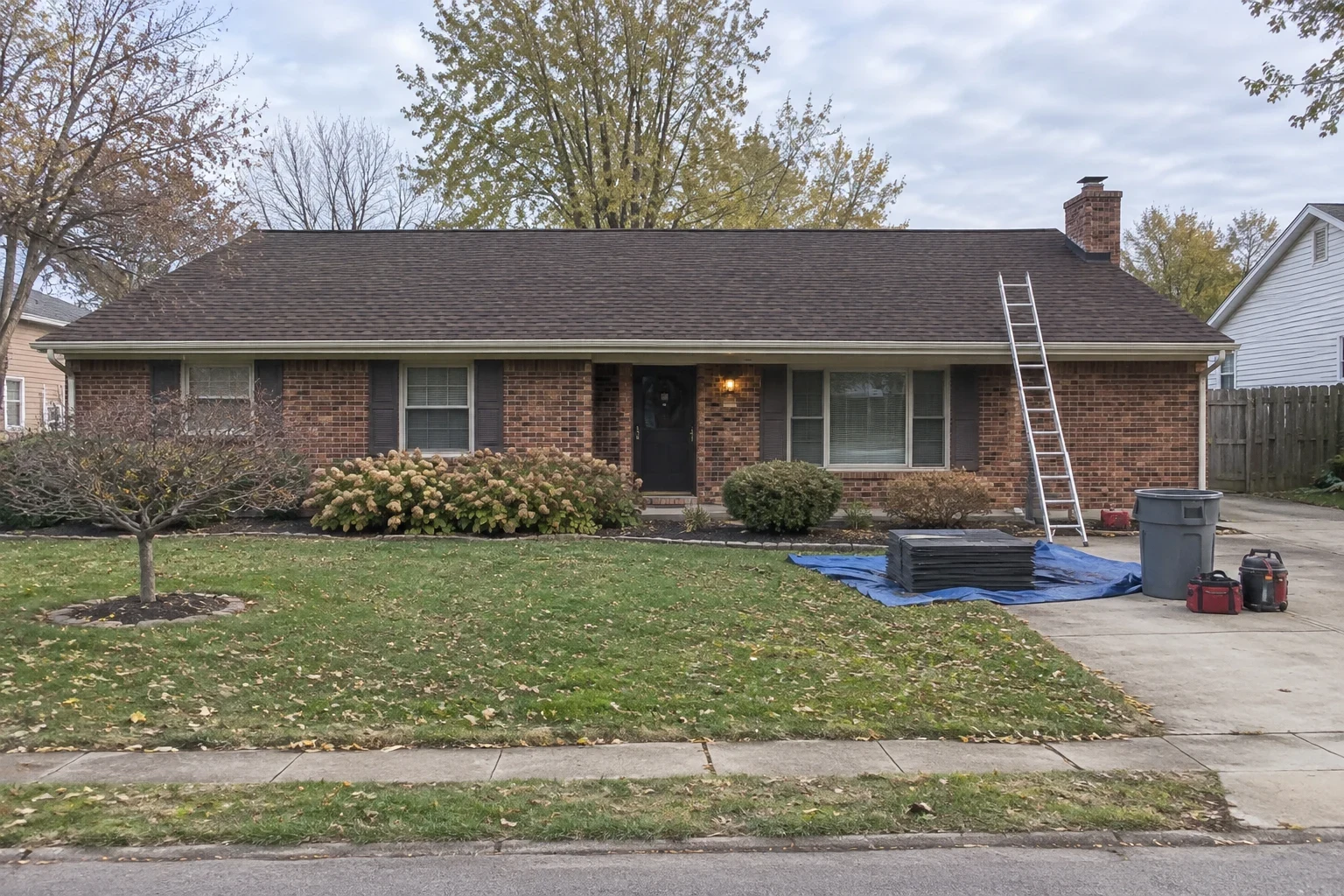
We serve New Palestine and nearby towns including Cumberland, Greenfield and McCordsville. One call sets up a careful look at your roof, and the photos are yours to keep.