ServicesTPO Roofing
TPO Roofing in New Palestine
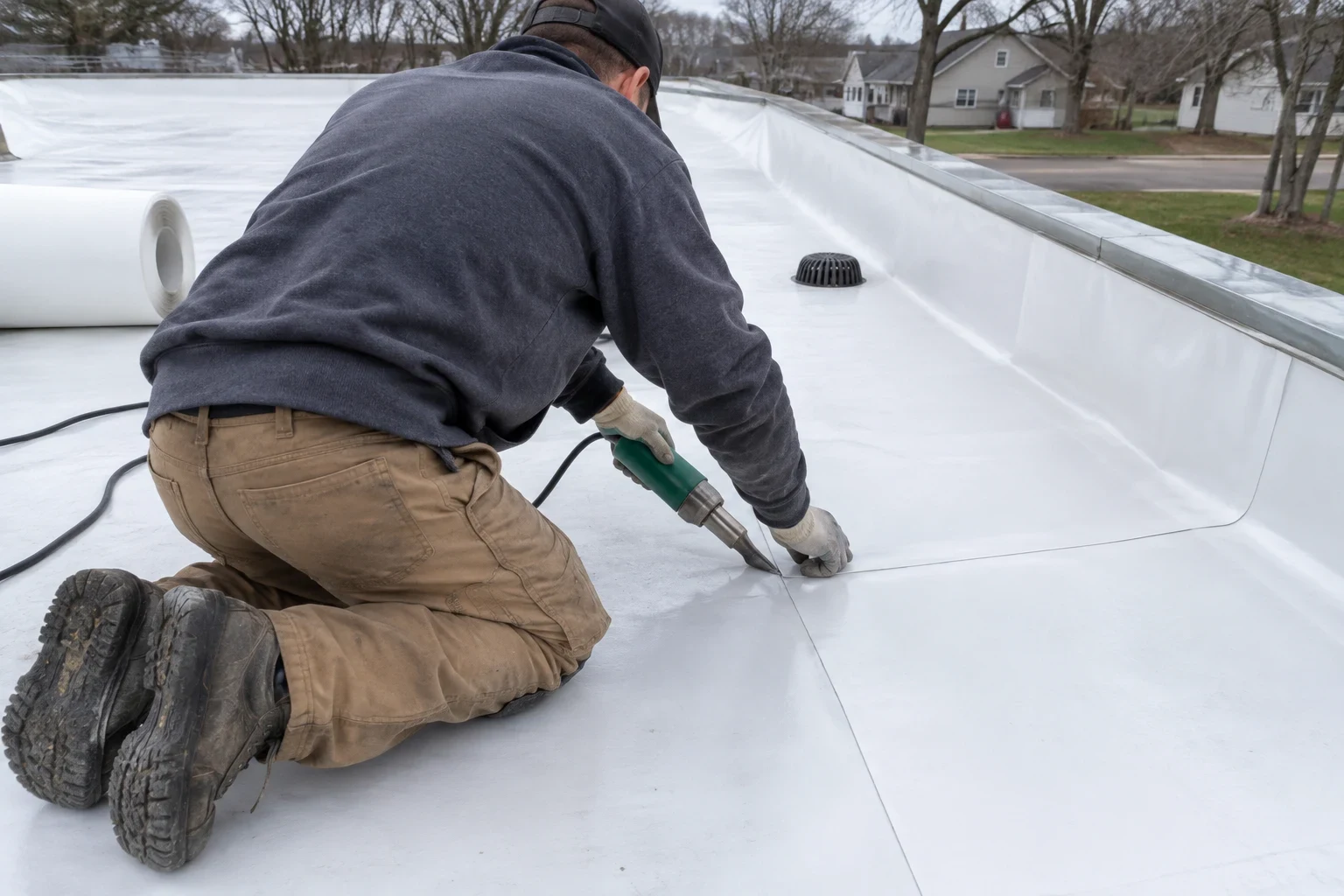
Porch roofs, rear additions and flat garage roofs need a membrane, not shingles. We install TPO with hot-air welded seams, no open flame and a work area kept clear of your family. It starts with a careful look at what you have now.
A membrane made for roofs that barely slope
Shingles depend on gravity. On a roof pitched lower than about 2 in 12, water moves too slowly and works its way under the laps. TPO is a single sheet of thermoplastic membrane that covers the whole low-slope area, with every seam fused by heat into one continuous surface. Water has no edge to get under.
On most homes we see TPO on a covered porch, a sunroom or family room addition, a flat-roofed garage or the low section where two rooflines meet. The main roof may stay asphalt; we tie the two together so the transition stays watertight. If your whole roof is due, our roof replacement page explains how we plan both at once.
How we work matters as much as the material. Seams are welded with a hot-air gun rather than a torch, ladders are tied off, and nobody walks under the roof edge while we are on it.
What a TPO installation includes
Removal down to the wood
Old rolled roofing, modified bitumen or a worn-out membrane comes off completely so the deck is exposed. Any sheathing that is soft or separating is replaced before new layers go on.
Insulation and cover board
Rigid insulation is laid over the deck, sometimes cut in tapered pieces that guide water toward a drain or gutter. A smooth cover board on top gives the membrane a firm, level base.
Membrane and welded seams
The TPO sheet is either mechanically fastened or fully adhered, and every overlap is fused with a hot-air welder. Afterward we run a blunt probe along each seam so any gap is found and fixed before the crew leaves.
Perimeter and pipe details
Most low-slope leaks begin at the roof's edges, along a house wall or around a vent stack. We cut a dedicated flashing piece for each of these spots and weld it into the main sheet.
Drainage at the edge
Water on a low-slope roof needs a clear exit. We confirm the gutter or scupper can handle the volume and bring in our gutters service if it falls short.
Signs your low-slope roof needs attention
- Water standing after rain
- Puddles still sitting two days after a storm point to a sagging deck or blocked drainage. Ponded water adds weight and wears out older roofing faster.
- Blisters and cracked surfacing
- Bubbles in rolled roofing, or a gray, crazed finish on an aging membrane, signal trapped moisture and sun wear. When that top layer splits, water finds its way in.
- Stains on the porch ceiling
- A brown ring on the beadboard or drywall beneath a flat section is often the first clue. The actual entry point is usually a few feet upslope from where the stain appears.
- Seams lifting at the edges
- Repeated freezing and thawing over a Central Indiana winter works loose laps and edge metal apart. Once an edge lifts, wind can get beneath the sheet.
- A deck that flexes
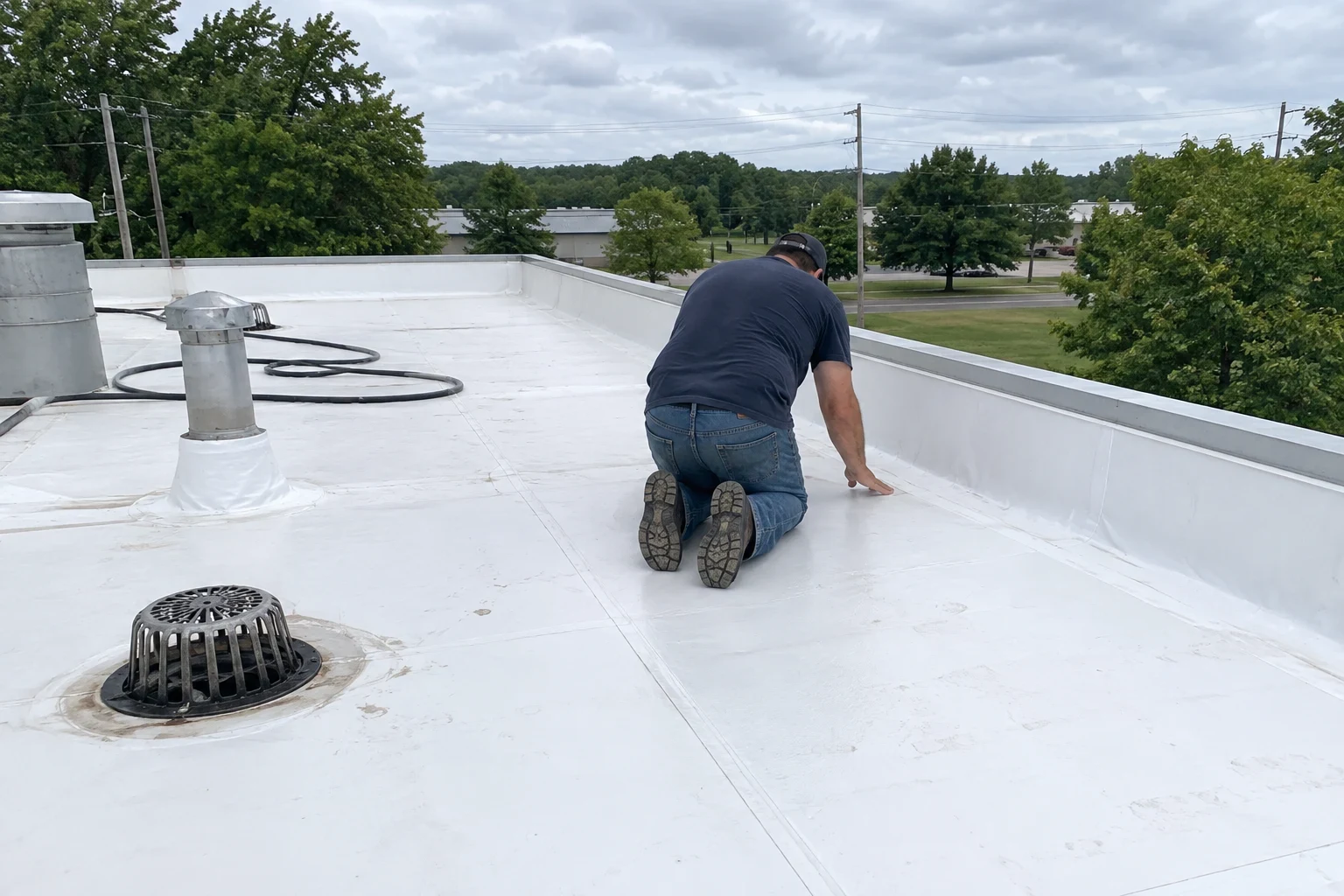
- When part of the roof sinks a little under your weight, the plywood beneath may be rotting. Please keep off that area; we start by checking it from a ladder and around the perimeter.
How the job runs
- 1
Inspection and written scope
We measure the low-slope section, look at the underside of the deck when there is access, and take photos as we go. The written scope lists the membrane work and any wood repair on separate lines.
- 2
Setting up a safe work zone
Before anything comes off, we mark the ground below the work, move grills and patio furniture, and cover plantings. We ask that children and pets stay indoors or on the far side of the house while the crew is up.
- 3
Tear-off and deck repair
Debris goes directly into a dumpster or trailer instead of landing on your lawn. Damaged sheathing is replaced that same day, so the roof is never left open overnight.
- 4
Install, weld and test
Insulation, cover board and membrane are laid in sequence, then seams and flashings are welded and probed. Because the welding uses hot air, there is no open flame near your eaves or trim.
- 5
Cleanup and walkthrough
A magnetic sweeper goes over the yard and driveway to pick up stray fasteners. Then we go over photos of the finished roof and its edges with you.
What shapes the price of a TPO roof
Most low-slope sections on a home are small, so the details tend to move the price more than square footage does. We price each line separately so you can see where the cost comes from. Financing is available if it helps you plan the work.
- Condition of the deck
- Wet insulation or rotted plywood found during tear-off adds material and labor. We show you photos before replacing anything beyond the scope.
- Insulation and tapering
- Building in slope with tapered insulation costs more than a flat layer but solves ponding at its source.
- Walls, curbs and penetrations
- A porch roof that meets a second-story wall, a skylight or several vent pipes needs more flashing work than an open rectangle.
- Membrane thickness and color
- Thicker TPO holds up better to foot traffic and hail. White reflects summer heat; gray and tan cost about the same and blend with a darker main roof.
- Access and tie-ins
- Tight side yards, a low section above a deck, or joining the membrane to existing shingles all add setup time.
TPO roofing questions
- Can TPO go on my porch roof if the rest of the house has shingles?
- Yes, and it is one of the most common places we use it. We run the membrane up under the shingle courses where the two meet and flash the joint so water sheds from the steep roof onto the flat one. From the street, the porch roof is rarely visible.
- Is the install noisy or does it smell?
- Tear-off is the loud part and usually takes a few hours. Hot-air welding gives off little odor, and adhesives, when used, are applied with windows near the work kept closed. We will tell you which day carries the noise so you can plan around it.
- Can I walk on a TPO roof?
- It handles occasional foot traffic for cleaning gutters or checking a vent. If you plan to put chairs or planters on it, tell us at the inspection and we will add walkway pads so the membrane is protected.
- Will a white roof show dirt?
- It will dull over time, which does not affect performance. A gentle rinse with a garden hose restores most of the color. If you would rather it match the main roof, gray is a good choice.
- What if hail damaged my flat roof?
- We document the damage with photos and measurements and work with you and your insurance company on the claim. Our storm damage repair page covers how that process runs.
Let's look at that low section of roof
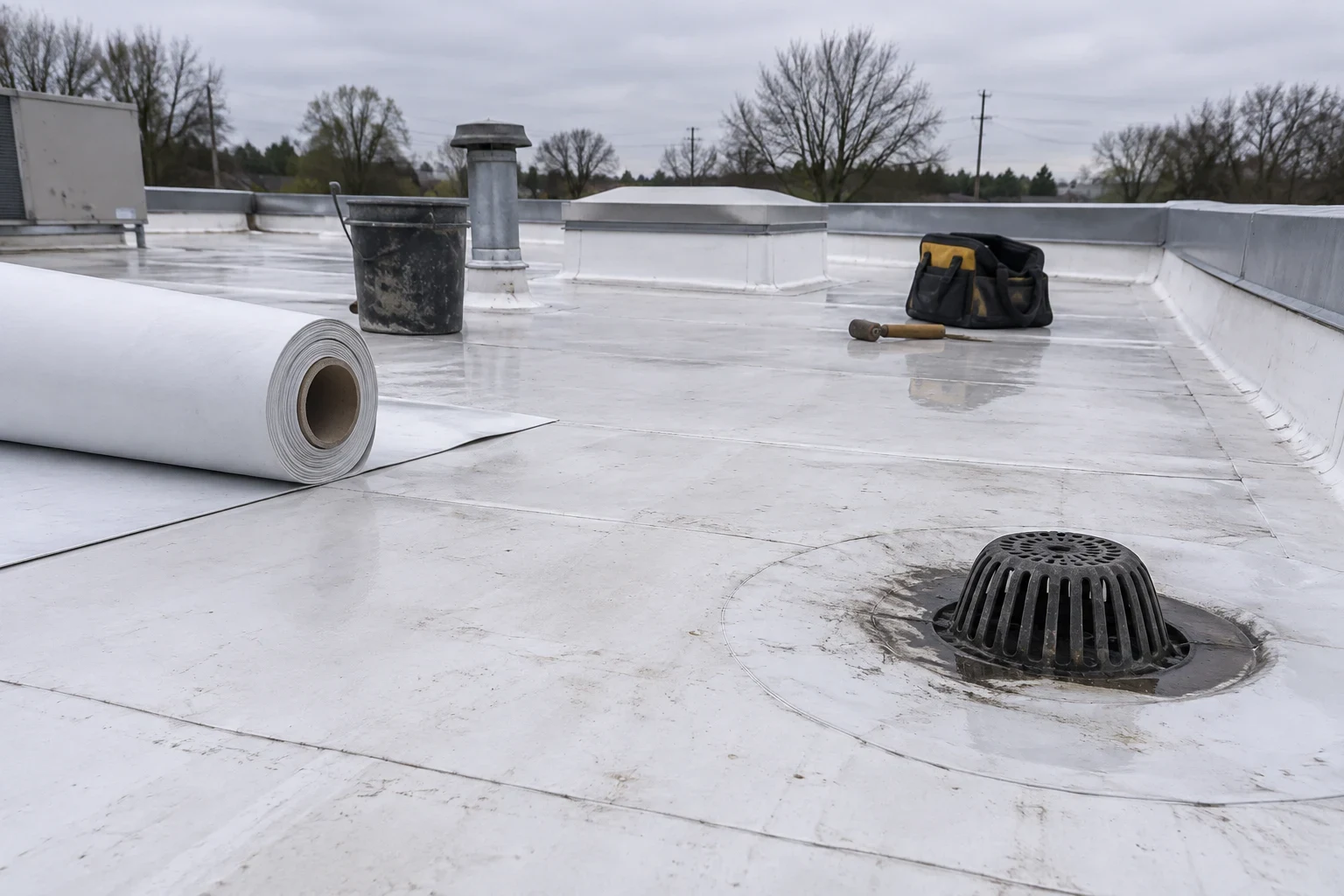
We will check the membrane, the deck and the drainage, then explain plainly whether it needs a repair or a new TPO roof.